
Standing firm in faith when your spouse walks a different path
Living in a mixed-faith marriage carries a particular kind of quiet ache. You love your husband deeply, you share a home, a kitchen, and often a long commute through Brisbane traffic together, yet the beliefs that shape your deepest convictions belong to you alone. In a country where same-sex marriage became law in 2017 and religious protections remain in public discussion, standing for a restored gospel can feel countercultural. Faith, in this setting, becomes something you carry personally rather than something you share by default.
Many women in Australia find themselves in this season for reasons that range from a spouse who lost belief to one who never joined in the first place. Some met their partner at university in Melbourne or Sydney, others through work in regional towns. Whatever the story, the path forward rarely requires dramatic gestures. More often, it asks for steady, faithful routines, the kind that quietly shape a soul over years.
There is also a particular resilience required when worship happens without a built-in study partner. The dinner table in your Perth home might host only your own prayers. Family home evening may be shortened or adapted. Yet this very aloneness can deepen the kind of personal conviction that survives criticism, cultural drift, and the slow erosion of casual belief. The Lord is well acquainted with disciples who walk without an obvious companion.
The shape of that growth is not mysterious. It begins with how you treat your husband, and it ripens into how you feed your own soul. What follows are some of the gentle disciplines that have helped women across Australia keep their covenants bright when their husbands do not share them.
Holding space for two journeys in one home
The first gentle work is refusing to treat your husband's path as a problem to fix. A spouse who is not a member of the Church deserves the same respect you would offer a thoughtful neighbour or a colleague with different convictions. In a society as openly secular as parts of coastal Sydney, treating it as a missionary project at home will only bruise the marriage. Choose the posture of a long-distance runner.
Practically, this looks like praying for him by name, asking the Lord to soften hearts in his own way and timing. It also looks like choosing not to weaponise every disagreement. When conversations about Sunday observance, tithing, or temple garments arise, speak your conviction kindly and then let the matter rest. Many Australian couples have found that shared values around honesty, kindness, and raising children well provide more common ground than they first imagined.
Making scripture study your steady anchor
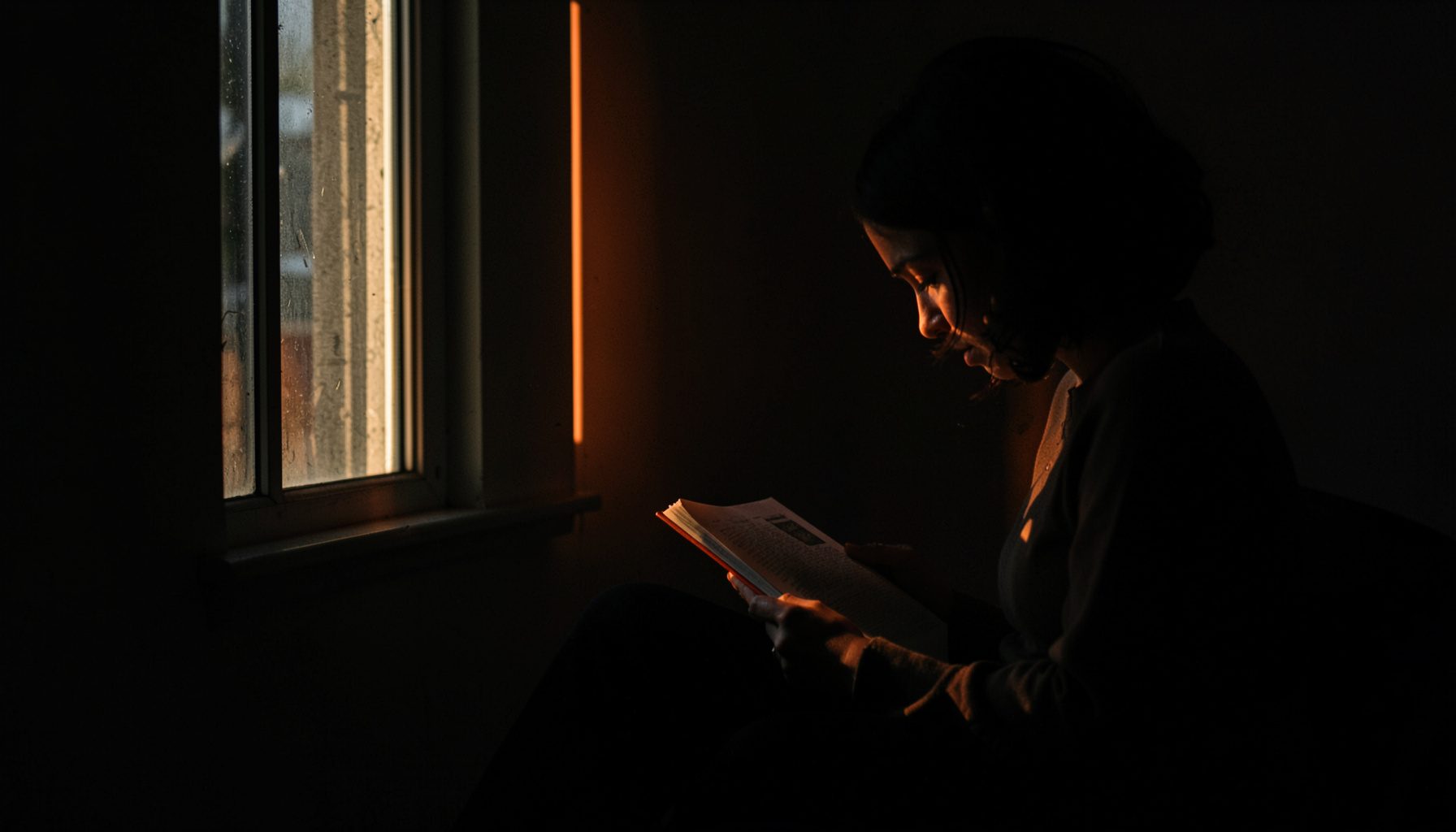
When your husband does not share your faith, the daily quiet time with the scriptures becomes non-negotiable. Without a partner to remind you, the habit must be self-sustaining. Some women in Adelaide set their alarm fifteen minutes earlier to read before the house stirs. Others pair study with a long train ride into the city, using the commute to ponder the words of Nephi rather than scrolling through emails. Whatever the rhythm, the key is consistency.
Pair the reading with a journal. Write down a single impression each morning. Over months, those small notes become a record of personal revelation, a kind of testimony in your own voice. In a marriage where this is not shared, this written account anchors your sense of direction. It also becomes a gift to your future self on the harder days, when doubt whispers louder than faith.
Listening for the whisper of personal revelation
Strengthening your own faith in this season means leaning hard into the gifts the Spirit is willing to give you. The gift of tongues, sometimes misunderstood, sometimes underused, can be cultivated as a real source of personal peace. Women exploring the gift of tongues often describe a quiet strengthening of their inner convictions, a kind of spiritual rhythm that steadies them when the world feels loud.
Revelation rarely arrives in dramatic manifestations. For most it comes as a settled feeling during a hymn, a phrase that catches the eye during a long lunch break in the park, or a thought that persists despite the mind's protests. Learn to notice these whispers. Write them down. Discuss them with a faithful friend or a Relief Society sister. The Lord will teach you, line upon line, especially when no one else in your home is asking the same questions.
Choosing gentleness when worldviews differ
Conflict is part of every marriage where belief differs. The temptation to prove yourself correct can be strong, especially when your convictions feel sacred. Yet the covenant path is not walked with clenched fists. It is walked with open hands.
Pick your moments. Save the heavier gospel conversations for calm evenings. When you speak, use phrases like "this is what I feel" rather than "you are wrong." A non-member husband is far more likely to soften toward belief when he sees the fruit of the gospel in your daily life than when he is told what to believe. Patience is a form of love, and love is the highest language of testimony.
Teaching children to stand in gospel light
Children raised in mixed-faith homes often grow up with a quiet spiritual resilience that reaches beyond their age. They see two worldviews side by side and, if taught well, learn to hold their own convictions with kindness. Mothers in this situation carry the primary responsibility of passing on a living faith, and the work is sacred.
Practical efforts matter. Read the Book of Mormon together each evening. Pray as a family even when Dad does not join. Make the gospel visible through ordinary rituals, like saying grace at a Sunday roast. As children grow, teach them to defend their faith with respect, a skill set that will serve them well in Australian classrooms where pluralism is the norm. For deeper reflection on shaping children who can hold firm, the conversation about resilient children offers encouragement.
Staying rooted in covenant belonging
Your place in the covenant remains intact. Temple attendance, when possible, is one of the most powerful stabilisers of a woman's faith. Many Latter-day women in regional Australia travel hours to attend the temple, and the journey itself becomes a form of devotion. Ward and stake communities are also a quiet lifeline. Accept the ministering texts, attend the women's meetings, and let the sisters carry you when the road feels long.
Belonging does not depend on your husband's choices. It rests on your covenants with Him. When you keep those covenants, the Lord keeps His promises, and the strength to walk this unique path will not run dry.
A steady personal devotional life, anchored in daily scripture study, honest prayer, and gentle patience with your husband, will carry you further than dramatic spiritual demands on him ever could. The faith you build in this season will be your own, and it will hold.